

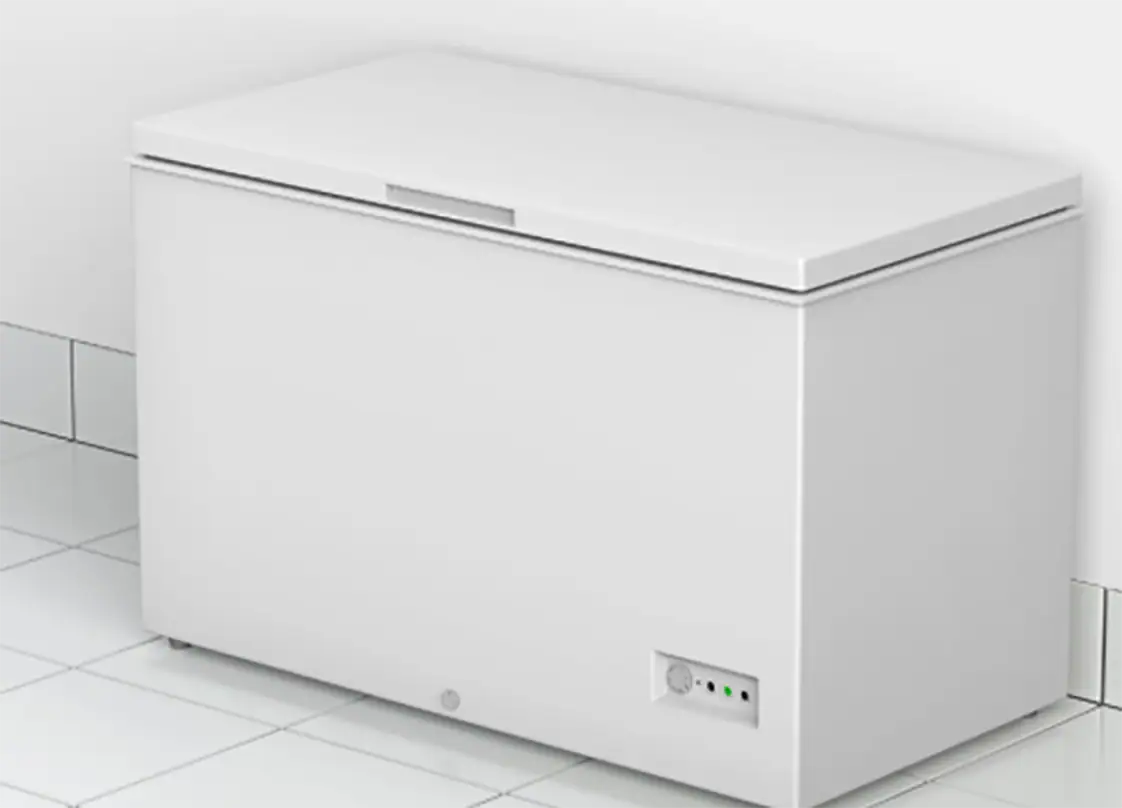
A refrigeration system consists of a set of components designed for cooling and, in some instances, heating.
For the most part, it relies on a thermodynamic cycle to transfer heat from one location to another.
Put simply, it is a system capable of cooling and sustaining temperatures within a specific range. While it is typically mechanical, it can also be implemented through simpler methods—such as using water or other liquids—to lower temperatures.
1. Evaporator
In a refrigeration system, there is a key component called the evaporator. Its main job? To take in heat. This heat can come from the surrounding air or any other material that needs to be cooled down.
Once the evaporator has absorbed this heat, the heat doesn’t stay put. It moves through a set of coils, and these coils lead straight to another part of the system: the compressor. When the heat (along with the refrigerant it’s paired with) reaches the compressor, the compressor gets to work. It compresses the refrigerant, and in doing so, cools that refrigerant down to an even lower temperature than before.
After being compressed and cooled, the refrigerant—now in a cooled state—moves on to the condenser. Most of the time, this condenser is placed where it’s exposed to the outside air. The condenser has a crucial role here: it releases the heat that the refrigerant is carrying. As this heat is released, something happens to the refrigerant’s state. It shifts from being a gas back into a liquid.
None of this process happens on its own, though. It needs energy to run. That energy comes from an outside source—like an electric motor or a gas engine. This external power source is what makes the compressor operate.
Finally, the refrigerant—now a cooled liquid—makes its way back to the evaporator. Once it’s there, the cycle starts all over again: the evaporator absorbs more heat, and the whole sequence repeats.
2. Condenser
What does the condenser do in a refrigeration system? Its main job is to take heat out of the refrigerant.
The condenser is an air-cooled device. That means one important rule for it: it has to be installed in a place where air circulates well.
Inside the condenser, there are tubes and fins. When the refrigerant flows through these tubes, the tubes and fins soak up the heat from the refrigerant. And this heat-absorbing process does something to the refrigerant—it makes the refrigerant evaporate.
Once the refrigerant turns into vapors, these vapors don’t just stay there. They are moved back to the compressor. When they get to the compressor, two things happen: the compressor compresses them again, and it cools them down too. With that, the whole cycle is finished.
Now, let’s talk about residential or commercial air conditioning systems. In these systems, the condenser coils often use a type of refrigerant. This refrigerant is called R-22. And R-22 wasn’t made by accident—it was specially developed for systems like these.
But here’s a catch: the U.S. Environmental Protection Agency (EPA) has banned R-22. Why? Because R-22 has a high global warming potential (GWP).
Even with this ban, not all systems have stopped using R-22. Some older systems still use it.
On the other hand, newer residential and commercial air conditioners are different. They use a refrigerant called R-410A. How is R-410A different from R-22? Its global warming potential (GWP) is much lower than that of R-22.
3. Compressor
Known as the “heart” of the refrigeration system, the compressor acts as an air pump. It compresses refrigerant gas and alters its state, enabling the gas to absorb heat. This process generates cooling, which is then distributed throughout a facility via air ducts.
In a refrigerator, the compressor operates by drawing in warm air from inside the appliance and pumping it through coils in the condenser. These coils are located outside the refrigerator unit—typically on the top or back. As air passes over these coils, it cools down and is then recirculated back into the refrigerator, keeping stored products cold.
There are two main types of compressors used in refrigeration systems: reciprocating (also referred to as piston compressors) and rotary screw compressors. Reciprocating compressors use pistons to move refrigerant through a system of valves and chambers. Rotary screw compressors, on the other hand, use rotors with blades that spin at high speeds. These spinning blades create pressure differences within the system, which propel the refrigerant through valves and chambers.
4. Expansion Device
The expansion device is a key component of a refrigeration system. It regulates the flow of liquid refrigerant within the system and helps prevent both overcharging and undercharging of the cooling system.
The primary purpose of an expansion device is to control the amount of liquid refrigerant entering the evaporator coil. This helps maintain the system’s pressure at an optimal level, avoiding unnecessary costs and the need for repairs.
An expansion valve (a common type of expansion device) is made up of two parts: a cap and a body. The cap contains a diaphragm with a spring attached to it. The body is connected to the cap by two hoses—one for drawing suction from the evaporator and another for discharging to the condenser.
When liquid refrigerant enters the expansion valve, it exerts pressure on the spring-loaded diaphragm inside the cap. This pressure pushes open one or more ports in the cap, allowing refrigerant to flow into either the suction line or the discharge line. The direction of flow depends on whether the system’s pressure is being increased or decreased.
The volume of liquid refrigerant passing through each port is determined by two factors: first, the pressure difference between the suction line pressure and the discharge line pressure; second, the temperature difference between the suction line temperature and the discharge line temperature.